Days
Hours
Minutes

ENVP 2026

GENERAL INFORMATION

28 September 2026, Copenhagen

LOCATION

MEETING VENUE

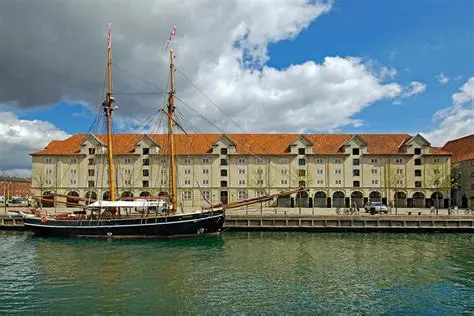
Eigtveds Pakhus

Strandgade 25D,
1401 Copenhagen,
Denmark

The venue has easy access from the airport (less than 10 km) by public transportation such as bus, metro and train. Christianshavn metro st. is located under 1 km from the venue.

Sponsors have one free parking slot.

Find more information about the venue here

SOCIAL EVENT

Social Dinner

Join us after the conference for dinner at Spiseloppen, just a 10-minute walk from Eigtveds Pakhus.

For DKK 312,50, your dinner ticket includes:

  • Starter
  • Main course
  • A glass of wine

This special offer is a great opportunity to enjoy an excellent meal and connect with fellow participants in a relaxed and informal setting.

We look forward to an enjoyable evening of good food and conversation.

Please purchase your ticket during registration, as there is a capacity limit for this event.

FIND

PARKING

It is possible to park at an additional cost outside of the venue.
Peter Roslev, ENVP 2026 Organising Committte

Associate Professor Peter Roslev

Associate Professor, Department of Chemistry and Bioscience, Aalborg University

Peter Roslev is an associate professor of Environmental Science in the Department of Chemistry and Bioscience at Aalborg University. His research integrates biology, chemistry, and engineering, with a focus on environmental toxicology, emerging contaminants, and the use of UV-based technologies to mitigate pollution in water and air. He holds a PhD in microbiology from the University of Maine, USA.

Elvis Genbo Xu, ENVP 2026 Organising Committte

Associate Professor Elvis Genbo Xu

Associate Professor and Sapere Aude Research Leader, Department of Biology, University of Southern Denmark

Dr. Xu is a tenured Associate Professor and Sapere Aude Research Leader at the Department of Biology, University of Southern Denmark. His research focuses on environmental toxicology, ecotoxicogenomics, and ecological risk assessment, with particular expertise in micro- and nanoplastics, PFAS, endocrine-disrupting chemicals, and other emerging contaminants. Using a One Health perspective, he investigates how environmental pollutants affect ecosystems and human health. Dr. Xu received his PhD from the University of Hong Kong as James Henry Scott Scholar, and then held research positions at the University of California, Riverside, and McGill University before joining SDU. He serves as Associate Editor of Environmental Science & Technology and Water Research X and was awarded the prestigious Grundfos Prize 2025 for his contributions to environmental research.

Peter Svendsen, ENVP 2026 Organising Committte

Conference Secretary Peter Svendsen

Conference Secretary, Environmental Pollutants 2026, and Administrative Officer, Department of Environmental Science, Aarhus University

Peter Svendsen is an administrative officer at the Department of Environmental Science, Aarhus University, and serves as conference secretary for Environmental Pollutants 2026. He supports researchers running large projects with the administrative and practical side of their work, spanning communication, post-award research support, coordination, and the planning and facilitation of workshops and meetings. For ENVP 2026 he handles the organisational backbone of the event, so the scientific programme can take centre stage.

Pedro Carvalho, ENVP 2026 Organising Committte

Head of Section Pedro Carvalho

Head of Section and Associate Professor, Department of Environmental Science, Aarhus University

Pedro Carvalho is associate professor in environmental chemistry and head of the Environmental Chemistry and Toxicology section at the Department of Environmental Science, Aarhus University. His research spans water quality, technology and management, focusing on organic micropollutants and circular resource use. He applies advanced analytical tools to support the development of treatment solutions, including nature-based systems, treatment wetlands, as well as biofilm reactors, and bioelectrochemical systems. He is a former co-chair of an IWA Specialist Group, coordinates the Marie Curie NEUTRAL4GS project, collaborates widely across Europe and the Global South.

Nina Cedergreen, ENVP 2026 Organising Committte

Professor Nina Cedergreen

Professor, Department of Plant and Environmental Sciences, University of Copenhagen

Nina Cedergreens research has focussed on mixture and cocktail effects: how the combined effects of chemicals and other stressors can be predicted, and when mixtures act synergistically to produce larger effects than expected. Currently Nina Cedergreen hosts a 6 year NNF grant on The Safety of Biotechnological Plant Protection Products based on RNA and Peptide Technologies (ENSAFE.dk), creating the scientific foundation, methods and tools to evaluate the environmental safety of these new second-generation biopesticides. Her interests include chemical mode of action, risk assessment and natural bioactive compounds. She teaches toxicology and ecotoxicology at BSc, MSc and PhD level.

Kristian Syberg, ENVP 2026 Organising Committte

Professor Kristian Syberg

Professor, Head of Section, Department of Science and Environment, Roskilde University

Kristian Syberg is professor at Roskilde University, where his research bridges ecotoxicology, chemical risk assessment and environmental regulation, with a particular focus on plastic pollution. He draws on the fields of (eco)toxicology, governance, Science-to-policy, citizen science, and circular-economy in his work. He leads the Danish national centre for research in marine plastic pollution (MarinePlastic II), the Center for Interdisciplinary Plastic Research (CIPR), and serves as scientific advisor for the national partnership for circular economy for plastics and textiles – Trace.

Jan H. Christensen, ENVP 2026 Organising Committte

Professor Jan H. Christensen

Professor, Department of Plant and Environmental Sciences, University of Copenhagen

Jan H. Christensen is professor of environmental analytical chemistry at the Department of Plant and Environmental Sciences, University of Copenhagen, where he leads the Analytical Chemistry group and heads the Research Centre for Advanced Analytical Chemistry (RAACE). His group develops advanced analytical platforms and data-processing methods, including comprehensive two-dimensional gas chromatography (GCxGC-MS) and non-targeted screening, to characterise complex environmental samples.

Henrik Holbech, ENVP 2026 Organising Committte

Associate Professor Henrik Holbech

Associate Professor, Department of Biology, University of Southern Denmark

Henrik Holbech is associate professor and research group leader in the Ecotoxicology group at the Department of Biology, University of Southern Denmark. He is specialized in developing OECD test guidelines for detecting endocrine-disrupting chemicals in fish and invertebrates. He currently works on new biomarkers and endpoints to identify thyroid-disrupting chemicals across vertebrate classes. His research interests include effects of chemicals on vertebrate and invertebrate endocrinology, development of new approach methodologies (NAMs) and improved use of toxicity data across taxa in a “One Health” approach.

Carsten Suhr Jacobsen, ENVP 2026 Organising Committte

Professor Carsten Suhr Jacobsen

Head of the Department of Environmental Science, Aarhus University, Denmark

Carsten Suhr Jacobsen is a professor at Aarhus University, Denmark, specializing in environmental microbiology with a focus on ecosystems influenced by human made chemicals. He has been involved in several large projects aimed at understanding the interactions between microbial communities and their environments, with the goal of protecting soil health and water quality. Professor Jacobsen’s work employs advanced techniques, including multi-omics and microbial ecology tools, to explore how microbial processes can be harnessed for environmental restoration and ecosystem resilience. His research contributes to a better understanding of how soil microbes play a crucial role in nutrient cycling, soil structure, and plant health, especially in the context of mitigating the negative impacts of pesticides and other pollutants. His research projects, such as EMBARQ, GENEPEASE and INTERACT, focus on leveraging microbial functions in soil and groundwater ecosystems.